FreeThought
A set of apps designed to
support thinking techniques.
- Help tools
- Coach tools
- Storyteller explainers
The Adventure Begins.
Circle-of-Excellence was created by Dr Peter Smee,
who has spent more than thirty years studying how
people think, learn, decide, create, and solve problems.
His work spans artificial intelligence, neuropsychology,
educational technology, corporate consultancy, university teaching,
learning strategy, facilitation, and global educational initiatives.
Throughout that time,
one question kept returning:
How can people think more
clearly, make better decisions and
continue developing their own judgment?
Circle-of-Excellence brings together
the methods, ideas and practical
experience developed during that journey.
To help professionals build a deeper
and more effective relationship with AI -
one that strengthens human thinking rather
than weakening, subverting, or replacing it.
The Adventure Continues
A set of apps designed to
support thinking techniques.
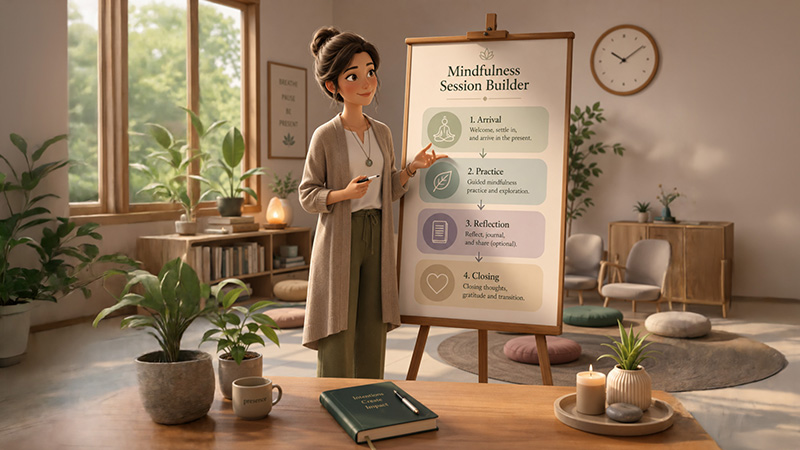
A set of apps designed to
help teachers of mindfulness.
Overview
The Adventure Takes Shape
Use AI to become better at thinking, learning, questioning and deciding. AI can act as a teacher, trainer, coach, mentor, facilitator, buddy, and sparring partner...and many more. Basically, AI can emulate anyone you wish.
A better prompt may improve an answer. A better question can change the direction of your thinking, expose assumptions and reveal that you may be solving the wrong problem. Get into the habit of asking the question that opens up the thinking.
AI often provides a plausible answer. But question it, challenge it, refine it and use the conversation to develop the thinking further. AI can help us move beyond the obvious by generating alternatives, making new connections and exploring possibilities we may not have considered. Use it to expand your thinking, not just complete the task in front of you.
Thinking becomes richer when we connect ideas, experiences and different perspectives. AI can help us see relationships we may have missed, explore how one idea influences another and understand a problem in its wider context. Use it to make connections that turn information into insight and insight into understanding.
There is no single human way of thinking. Different people favour different cognitive styles, perspectives and philosophies of life. These can be explored through eight distinct thinking personas, which broadly span quantitative, qualitative and more unconventional or quirky ways of making sense of the world. AI can help us move between these perspectives rather than remaining trapped within our own preferred way of thinking.
Not every situation can be understood in the same way. Some can be modelled logically; others are better understood holistically and visually. Complex environments require approaches drawn from complexity theory, while chaotic environments may require chaos theory and, where appropriate, fractal approaches. Some situations involve such deep uncertainty that they cannot currently be modelled reliably at all. Good thinking begins by recognising what kind of situation we are dealing with.
Consciousness is still not well understood, and no single model has yet provided a complete explanation. The dominant scientific approach tends to locate consciousness primarily in processes of the brain, but other possibilities deserve exploration. These include models in which different neurological or cognitive systems contribute distinct forms of awareness; embodied models in which consciousness emerges through interactions involving the brain, nervous system and wider body; and more holistic or non-local models in which the brain is conceived less as the sole producer of consciousness and more as part of a wider receiving, filtering or organising system.
The Adventure Becomes Practical
For many people, this is the main way they use AI. AI can help you get work done by researching, organising, summarising, drafting, comparing and analysing information quickly. But it will make mistakes. You still need to know what good looks like, check its work and be prepared to go through several interactions.
Possible rolesAI might act as a researcher, analyst, editor, project assistant or subject specialist, with each role changing the way it approaches the task.
Professional useAI can draft reports and emails, summarise meetings, structure documents, compare options and prepare first versions of presentations. The professional remains responsible for judgement, quality and the final decision.
Educational useAI can summarise material, organise notes, create revision resources, generate examples and help structure assignments. Used well, it frees learners to spend more time understanding, questioning and applying what they learn.
AI can examine what you have produced and help you improve it. It can identify weaknesses, suggest improvements, question assumptions and provide another perspective before you make a decision.
Possible rolesAI can play many different roles, rather than simply critique a piece of work. For example, you will get different kinds of feedback depending on whether it is asked to act as a sounding board, advisor, reviewer, friendly buddy, sparring partner or even an evil nemesis whose job is to find every weakness in your thinking.
Professional useAI can review proposals, challenge strategies, critique presentations, test arguments and help prepare for difficult meetings.
Educational useLearners can ask AI to review an argument, question their reasoning, challenge an explanation or give feedback on a presentation. This makes repeated practice and improvement much easier.
AI can help you structure problems, generate alternatives, make connections, challenge assumptions and use sophisticated thinking techniques. It can support creativity, problem solving, decision making, strategic thinking, scenario planning and risk analysis. There are many different ways of thinking, from the highly logical and analytical, through more holistic and visual approaches, to narrative and imaginative techniques. AI can work across these different approaches, helping people develop new ways of thinking and become more skilful in how they use them.
Possible rolesAI can take on different roles depending on what kind of support is needed. It can act as a consultant and apply a technique to the problem; a facilitator who guides you through the process step by step; a coach who helps you become more skilful at using the technique yourself; a mentor who helps you see new possibilities; or a narrator who brings ideas to life through stories, examples and case studies.
Professional useIndividuals and teams can use AI-supported thinking techniques to explore real-world problems, generate alternatives, challenge assumptions and improve the quality of their decisions.
Educational useThe same techniques can support problem-based learning. Students can work through real or simulated problems while AI guides the process, asks questions and introduces different perspectives.
AI can help you learn by explaining difficult ideas, asking questions, testing understanding and adapting the level as you improve. It can become a personalised learning environment that responds to what you already know.
Possible rolesAI can act as a teacher, trainer, tutor, coach, mentor, study partner, examiner or practice partner. Each role gives a different emphasis, which is why it is important to understand what the role actually means. For example, a teacher and a trainer may both help someone learn, but they can differ significantly in what they focus on and how they work.
Professional useAI can support continuous professional development by helping people learn new subjects, prepare for new responsibilities and practise workplace skills. It is particularly useful for just-in-time learning, providing advice, explanation or guidance at the moment it is needed.
Educational useLearners can ask AI to explain complex ideas, quiz them, identify gaps in understanding or ask them to teach a topic back. It can also provide repeated opportunities to practise.
AI can help teachers, trainers and facilitators design, deliver and improve learning experiences. It can create explanations, examples, exercises, questions, stories, simulations and case studies, and adapt them for different audiences. It can also help make learning more responsive by changing the level, style or format of an activity to suit different learners and situations.
Possible rolesAI can take on many different roles within a learning experience. It can act as a co-teacher and help explain a subject; a facilitator who guides a discussion or activity; an assessor who asks questions and tests understanding; or a coach who gives feedback and encourages improvement. It can also play characters with whom learners interact, such as a customer, patient, manager, colleague, stakeholder or fictional character. The role chosen changes the nature of the experience, so it is important to be clear about what the AI is being asked to do and how that role contributes to the learning.
Professional useTrainers, coaches and facilitators can use AI to create materials, develop scenarios and role plays, adapt content for different audiences and explore new ways of teaching a subject. It is particularly useful when learning needs to be created or adapted quickly, for example when introducing a new process, preparing people for a change in responsibilities, or providing just-in-time support.
Educational useTeachers can use AI to plan lessons, create differentiated activities, generate assessment questions and provide students with interactive characters and situations through which they can learn. It can also support more active forms of learning, where students question, discuss, practise, make decisions and receive feedback rather than simply consume information.
AI can help people understand disagreement, explore different points of view and prepare for difficult conversations, negotiations and disputes. It can help uncover misunderstandings, identify common ground and consider different ways of responding.
Possible rolesAI can act as a mediator, moderator, negotiator or adjudicator. It can also play the other party in a disagreement or represent different stakeholders and perspectives.
Professional usePeople can rehearse difficult conversations, explore a dispute from several viewpoints and test different approaches before entering a real negotiation or meeting.
Educational useLearners can practise negotiation, mediation, debate and conflict resolution through role play. AI can respond to what they say, change the situation and provide feedback afterwards.
AI can help develop the knowledge, judgement and skills needed in emergency, crisis and high-pressure environments. It can present information, introduce unexpected developments, challenge decisions and help people review what happened afterwards.
Possible rolesAI can play colleagues, commanders, casualties, members of the public, witnesses, adversaries or other people involved in a developing situation.
Professional useAI can support training for emergency services, military personnel, security professionals and crisis managers through realistic and repeatable simulations.
Educational useLearners can work through evolving scenarios, decide what to do next and experience the consequences of their choices. Afterwards, AI can help them reflect on their decisions and consider alternative responses.