App 01
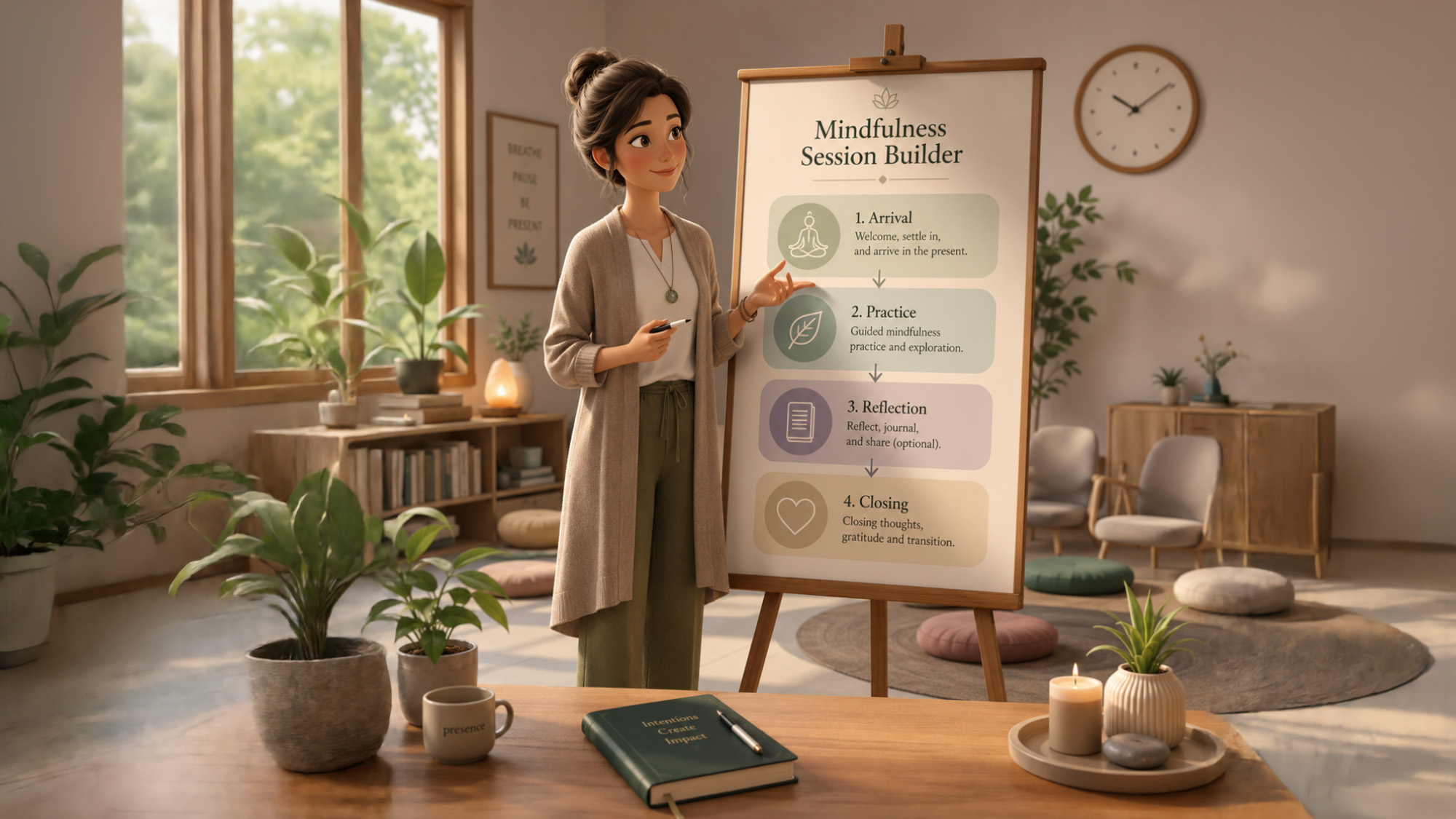
Mindfulness Session Builder
Design complete mindfulness sessions.
Mode 1
Help.
Help Mode Menu
Tell me what
kind of session
you are planning.
Things to think about: What kind of session? For example: introductory, intermediate, advanced, specialist, body work, breath work, walking meditation. How long? For example: 3, 5, 10, 20, 30 or 45 minutes. Who is it for? For example: beginners, a workplace group, a one-to-one client, an online group, or an experienced class. What is the main theme? For example: stress, grounding, sleep, compassion, focus, working with thoughts, or emotional balance. Where will the session happen? For example: online, in person, workplace, class, retreat, or one-to-one. Anything I should be careful about? For example: limited mobility, trauma-sensitive language, a cynical group, low energy, or people with very little time.
Here is a sample prompt: "Please create a 30-minute online session for workplace beginners on grounding and focus. Keep it secular, practical and gentle.” Now...as you feel more confident...begin to type...
Things to think about: What kind of session? For example: introductory, intermediate, advanced, specialist, body work, breath work, walking meditation. How long? For example: 3, 5, 10, 20, 30 or 45 minutes. Who is it for? For example: beginners, a workplace group, a one-to-one client, an online group, or an experienced class. What is the main theme? For example: stress, grounding, sleep, compassion, focus, working with thoughts, or emotional balance. Where will the session happen? For example: online, in person, workplace, class, retreat, or one-to-one. Anything I should be careful about? For example: limited mobility, trauma-sensitive language, a cynical group, low energy, or people with very little time.
Here is a sample prompt: "Please create a 30-minute online session for workplace beginners on grounding and focus. Keep it secular, practical and gentle.” Now...as you feel more confident...begin to type...
Mode 2
Coach.
Coach Mode Menu
I can coach you
in how to design a
session step by step.
Things to think about: The aim What you want people to experience, practise or understand. The audience Who the session is for, and what they may need. The theme The main focus of the session, such as stress, grounding, compassion, sleep, focus or working with thoughts. The practice choice Which mindfulness practice fits the purpose and audience. The structure How to shape the opening, teaching point, key themes, main practice, reflection and final closing. The tone How to make the language warm, clear, invitational and appropriate. Safety and care Anything to consider around mobility, trauma-sensitive language, breath focus, group confidence or emotional sensitivity.
Remember...You can ask anything related to coaching.
Things to think about: The aim What you want people to experience, practise or understand. The audience Who the session is for, and what they may need. The theme The main focus of the session, such as stress, grounding, compassion, sleep, focus or working with thoughts. The practice choice Which mindfulness practice fits the purpose and audience. The structure How to shape the opening, teaching point, key themes, main practice, reflection and final closing. The tone How to make the language warm, clear, invitational and appropriate. Safety and care Anything to consider around mobility, trauma-sensitive language, breath focus, group confidence or emotional sensitivity.
Remember...You can ask anything related to coaching.
Mode 3
Science.
Science Mode Menu
I can explain the science
behind good mindfulness session
design in clear, practical language.
You might like to know: Session structure Why arrival, practice, reflection and closing each matter. Attention and distraction Why minds wander, and how mindfulness helps people notice and return. Stress and settling Why grounding, pacing and safety matter when people arrive stressed or distracted. Practice choice Why breath, body, sound, movement, compassion or reflection practices suit different purposes. Pacing and cognitive load Why too much teaching, too many instructions or too many practices can overwhelm people. Reflection and learning Why inquiry, journaling and group reflection help people integrate the practice into their lives. Safety and care Why choice, invitational language, eyes-open options and staying within role are important.
Remember...You can ask me anything about science and scientific principles.
You might like to know: Session structure Why arrival, practice, reflection and closing each matter. Attention and distraction Why minds wander, and how mindfulness helps people notice and return. Stress and settling Why grounding, pacing and safety matter when people arrive stressed or distracted. Practice choice Why breath, body, sound, movement, compassion or reflection practices suit different purposes. Pacing and cognitive load Why too much teaching, too many instructions or too many practices can overwhelm people. Reflection and learning Why inquiry, journaling and group reflection help people integrate the practice into their lives. Safety and care Why choice, invitational language, eyes-open options and staying within role are important.
Remember...You can ask me anything about science and scientific principles.
Mode 4
Storytelling.
Stories Mode Menu
I can show you short
teaching stories about
skilful mindfulness session
design in real situations.
You might want a story about: A beginner group How a teacher keeps the session simple, clear and reassuring. A workplace group How a teacher makes mindfulness feel practical, secular and relevant. An anxious or unsettled group How a teacher chooses grounding, pacing and safety before deeper practice. A group that struggles with silence How a teacher works gently with restlessness, awkwardness or discomfort. A teacher who planned too much How simplifying the session creates more space for real practice. A session that feels flat How a teacher brings the group back to intention, presence and participation. An online session How a teacher uses clearer transitions, shorter instructions and more explicit choice. A practice choice that needed to change How a teacher adapts when the original plan no longer fits the room.
You can choose one of these, or ask for a story about any teaching situation you are facing. I’ll tell a short story and draw out the teaching lesson.
You might want a story about: A beginner group How a teacher keeps the session simple, clear and reassuring. A workplace group How a teacher makes mindfulness feel practical, secular and relevant. An anxious or unsettled group How a teacher chooses grounding, pacing and safety before deeper practice. A group that struggles with silence How a teacher works gently with restlessness, awkwardness or discomfort. A teacher who planned too much How simplifying the session creates more space for real practice. A session that feels flat How a teacher brings the group back to intention, presence and participation. An online session How a teacher uses clearer transitions, shorter instructions and more explicit choice. A practice choice that needed to change How a teacher adapts when the original plan no longer fits the room.
You can choose one of these, or ask for a story about any teaching situation you are facing. I’ll tell a short story and draw out the teaching lesson.